Trolley Payouts: Infrastructure for Automated Global Partner Payments
 clairhogan398@gmail.com
Introduction
Digital platforms today operate without borders. Whether paying affiliates in Europe, contractors in the United States, or creators in Asia-Pacific, businesses must manage complex payout workflows.
Trolley payouts refer to a structured global payment infrastructure that helps companies automate mass payments while integrating identity verification, tax documentation, and regulatory safeguards into a unified system.
This guide explores the architecture, functionality, compliance structure, and operational considerations of trolley payouts for modern digital businesses.
Company Overview

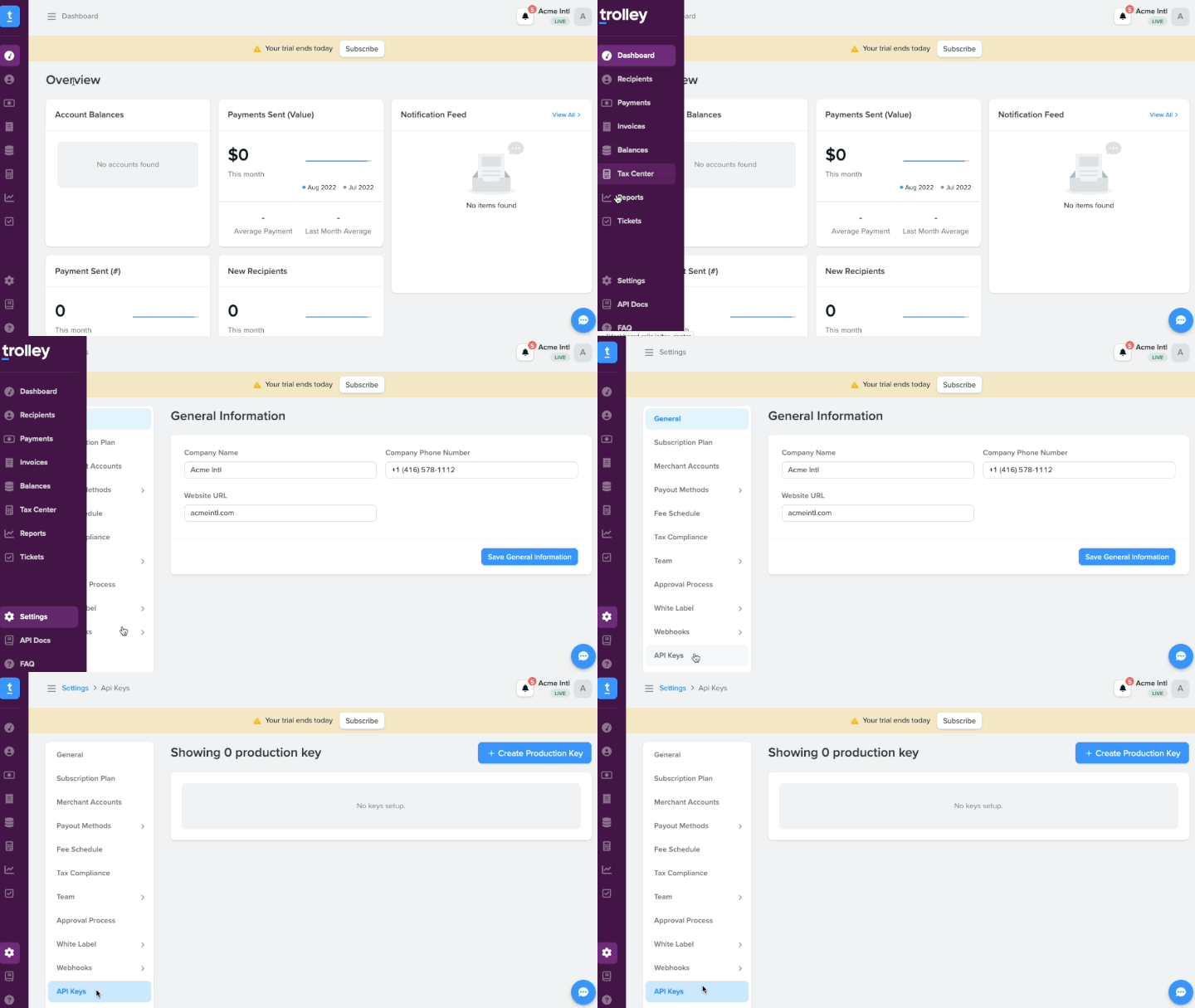
4
Trolley operates as a global payout infrastructure provider. Its platform is designed to assist companies that need to distribute funds to large networks of partners, suppliers, or independent contributors.
The system combines:
- Payment execution
- Compliance automation
- Tax document collection
- Recipient self-service onboarding
- Reporting dashboards
How Trolley Payouts Fit into Platform Ecosystems
Trolley payouts typically integrate within broader business systems such as:
- Marketplace platforms
- Affiliate tracking software
- Creator monetization tools
- SaaS partner networks
- Gig workforce systems
Rather than handling payouts manually through banking portals, businesses automate payment cycles through an API-driven workflow.
Core Architecture of Trolley Payouts
1. Recipient Onboarding Layer
Recipients access a secure onboarding portal where they:
- Verify identity (KYC procedures)
- Submit tax forms (e.g., W-8 or W-9 equivalents where applicable)
- Select payout method
- Provide transfer details
Automated validation reduces administrative errors and centralizes documentation.
2. Payment Processing Layer


4
Trolley payouts infrastructure supports multiple payout rails, depending on configuration and jurisdiction:
- ACH transfers (U.S.)
- Local bank transfers in supported countries
- International wire transfers
- Selected digital wallet options
- Multi-currency settlements
Payment timing depends on regional banking systems and selected methods.
3. Compliance & Risk Controls
One of the defining features of trolley payouts is the integration of compliance into payment workflows.
Key compliance functions may include:
- Identity verification screening
- Sanctions list monitoring
- AML checks
- Automated tax form validation
- Secure audit trail logging
This reduces operational exposure for companies distributing funds globally.
Benefits of Trolley Payouts for Growing Businesses
Companies using structured payout automation may experience:
Operational Efficiency
Batch payments reduce manual entry and reconciliation.
Global Reach
Supports expansion into new geographic markets.
Reduced Administrative Burden
Automated tax and compliance workflows simplify reporting.
Transparency
Centralized dashboards provide payment visibility and tracking.
Industry Use Cases
Trolley payouts infrastructure is commonly adopted in:
1. Creator & Influencer Economy
Managing recurring earnings distributions to global creators.
2. Affiliate Networks
Automating commission disbursement across jurisdictions.
3. SaaS Partnership Programs
Paying integration partners and referral networks.
4. Digital Marketplaces
Settling vendor balances in multi-currency environments.
Security Standards
Modern payout systems prioritize:
- Encrypted data transfer
- Role-based administrative access
- Secure storage of financial documentation
- Monitoring systems for transaction anomalies
Security architecture is essential for platforms handling sensitive financial information.
Implementation Considerations
Before implementing trolley payouts infrastructure, organizations should evaluate:
- Geographic footprint of recipients
- Currency requirements
- Tax reporting complexity
- Expected monthly payout volume
- Integration depth (API vs manual workflows)
Careful planning helps align payment automation with long-term scaling objectives.
Frequently Asked Questions
Are trolley payouts only for large enterprises?
While commonly used by scaling platforms, mid-sized businesses may also implement automated payout solutions.
Can payouts be scheduled automatically?
Yes. Automated batch scheduling is typically supported through system tools or API integrations.
Is tax documentation required?
Tax documentation requirements depend on jurisdiction and regulatory obligations.
Are funds held in accounts?
Operational structures vary; businesses should review provider documentation for specifics.
Conclusion
Trolley payouts represent a structured approach to managing international mass payments within digital ecosystems. By combining automation, compliance workflows, and global payment coverage, the platform supports organizations seeking operational scalability and regulatory consistency.
As digital marketplaces and partner ecosystems continue to grow, automated payout infrastructure becomes increasingly essential for sustainable expansion.